- Henna Powder Manufacturer & Exporter in India
- +91 9910415530
- online@nmpudhyog.com

Indigo Powder for Hair: Benefits, Uses & How to Apply
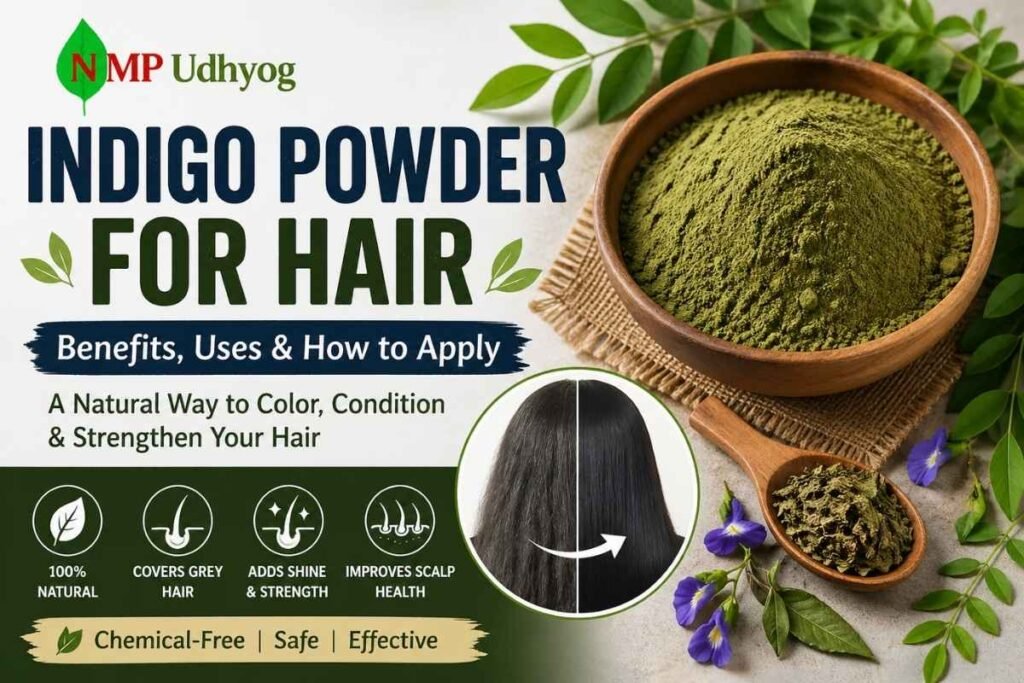
Chemical hair dyes might give quick results, but the long-term damage is hard to ignore. Frequent use often leads to dryness, breakage, scalp irritation, and even premature hair thinning. That’s why more people are now shifting toward natural alternatives that not only color the hair but also support its overall health. One such solution that has gained serious attention is indigo powder.
If you’re wondering what is indigo powder, it is a natural dye derived from the leaves of the Indigofera tinctoria plant, traditionally used for coloring hair and textiles. In simple terms, indigo powder means a plant-based, chemical-free option that helps achieve darker hair shades when used correctly, especially in combination with henna.
This guide breaks everything down in a clear, practical way. You’ll understand the real benefits of indigo powder for hair, its common uses, and most importantly, how to apply it properly to get the results you expect without damaging your hair.
What Is Indigo Powder?
If you’re trying to understand what is indigo powder, here’s the simple answer. Indigo powder is a natural, plant-based dye made from the dried and processed leaves of the Indigofera tinctoria plant. It has been used for centuries for coloring fabrics and, more recently, as a safe alternative for hair coloring.
In basic terms, indigo powder means a herbal coloring agent that contains natural blue pigment. On its own, it gives a bluish tint, but when used correctly with henna, it reacts to produce darker shades like brown or black on hair. This is why it’s widely used by people looking for a chemical-free way to cover grey hair.
Origin and History
Indigo has a long history, especially in countries like India, where it was traditionally cultivated for dyeing textiles. Before synthetic dyes existed, indigo was one of the most valued natural coloring agents. Over time, its use expanded into hair care as people started looking for natural alternatives to harsh chemical dyes.
Why It’s Used in Hair Care
Indigo powder is popular in hair care because it does more than just color. It helps improve hair texture, adds shine, and reduces the risk of damage caused by synthetic products. When combined with henna, it creates a natural coloring system that not only darkens hair but also conditions it, making it a practical choice for long-term use.
Indigo Powder Plant: Source & Composition
The indigo powder plant comes from Indigofera tinctoria, a small shrub widely known for its natural dye-producing properties. This plant has been used for centuries, especially in India and other tropical regions, where the climate supports its healthy growth. It typically grows in warm, humid conditions and is cultivated specifically for its leaves, which contain the natural pigment used in indigo powder.
Where It Grows
The indigo powder plant is mainly found in countries like India, Egypt, and parts of Southeast Asia. India, in particular, has a long history of cultivating indigo due to its suitable soil and climate conditions. The quality of the plant largely depends on where and how it is grown, which directly impacts the effectiveness of the final powder.
How Leaves Are Processed
The process starts by harvesting fresh leaves from the indigo powder plant. These leaves are then dried naturally and ground into a fine powder. In some traditional methods, the leaves are soaked and fermented to release the dye compound before being processed further. The final result is a greenish powder that develops its dyeing properties when mixed with water.
Natural Compounds Responsible for Dye
The key compound in the indigo powder plant is indican, which converts into indigo dye when exposed to oxygen. This is what gives indigo its characteristic blue color. When applied to hair, this pigment binds to the strands and creates darker tones, especially when used after henna.
Why Purity Matters
Not all indigo powders are the same. Pure indigo powder, made only from the indigo powder plant without additives, delivers better color and safer results. Low-quality or adulterated products may contain chemicals that reduce effectiveness and can even harm your scalp or hair. Choosing a high-quality, finely processed powder ensures consistent color and long-term hair health.
Benefits of Indigo Powder for Hair
When people look for a natural alternative to chemical dyes, the benefits of indigo powder for hair stand out for a reason. It doesn’t just color your hair, it improves overall hair health when used consistently and correctly. Unlike synthetic products that often weaken hair over time, indigo works more like a treatment that adds both color and strength.
Natural Hair Coloring Without Chemicals
One of the biggest advantages is that indigo powder offers a completely natural way to color hair. It contains no ammonia or harsh chemicals, making it a safer option for long-term use. When paired with Natural Henna for Hair, it creates rich brown to black tones without damaging the hair structure.
Strengthens Hair Strands
Regular use helps improve hair strength. Indigo coats the hair shaft, making it appear thicker and reducing breakage. This is one of the underrated indigo powder benefits for hair, especially for people dealing with weak or brittle strands.
Reduces Dandruff and Scalp Irritation
Indigo powder has soothing properties that can help calm the scalp. It may reduce itchiness and dryness, which are common causes of dandruff. Since it’s plant-based, it doesn’t trigger the kind of irritation that chemical dyes often do.
Adds Shine and Smoothness
Another noticeable effect is improved texture. Hair tends to feel smoother and look shinier after application. Over time, this makes your hair appear healthier and more manageable without relying on synthetic conditioners.
Helps Cover Grey Hair Effectively
For those dealing with greying hair, indigo powder is a practical solution. When used after henna, it provides a natural-looking dark color that blends well instead of looking flat or artificial. To get consistent results, sourcing from a reliable Henna Powder Exporter also plays a role in ensuring quality and effectiveness.
Overall, the benefits of indigo powder for hair go beyond just coloring. It supports healthier hair, improves scalp condition, and offers a safer long-term alternative to chemical treatments.
Uses of Indigo Powder for Hair
Understanding the real uses of indigo powder for hair helps you go beyond just basic coloring. It’s not a one-purpose product. When used correctly, it works as a natural dye, a conditioning treatment, and even a scalp care solution.
Natural Black or Brown Hair Dye
The most common use is as a natural coloring agent. Indigo powder is widely used to achieve dark brown to black shades without chemicals. When applied after henna, it reacts to create deeper tones that look more natural compared to synthetic dyes. This makes it a practical option for anyone trying to avoid long-term hair damage.
Grey Hair Coverage
One of the most effective uses of indigo powder for hair is covering grey strands. On its own, indigo may give a lighter tint, but when combined with henna, it provides a more even and darker finish. This two-step process helps blend greys seamlessly with the rest of your hair.
Hair Conditioning Mask
Indigo powder isn’t just about color. It can also be used as a conditioning treatment. When applied as a paste, it coats the hair strands, making them feel smoother and slightly thicker. Over time, this can improve manageability and reduce dryness.
Scalp Health Treatment
Another practical use is for maintaining scalp health. Indigo powder has mild soothing properties that can help reduce itchiness and dryness. Regular use may support a healthier scalp environment, which is important for overall hair growth and strength.
When you look at the full range of uses of indigo powder for hair, it becomes clear that it’s more than just a dye. It’s a multipurpose, plant-based solution that supports both appearance and hair health when used consistently.
Tips for Best Results
Getting good results with indigo isn’t about luck, it’s about doing the basics right. Small mistakes can completely change the final color and texture.
Always Use Fresh Paste
Indigo powder starts losing its effectiveness quickly after mixing. Always prepare the paste fresh and apply it immediately to get proper color payoff.
Avoid Shampoo Right After Application
After rinsing, don’t use shampoo for at least 24 hours. This gives the color enough time to oxidize and settle properly into the hair.
Use Non-Metal Bowls
Always mix indigo powder in a plastic, glass, or ceramic bowl. Metal can interfere with the natural dye process and affect results.
Do a Patch Test First
Even though it’s natural, you shouldn’t skip this step. Apply a small amount on your skin or a hair strand to check for any reaction or unexpected color.
Common Mistakes to Avoid
Most people who say indigo “doesn’t work” usually make one of these mistakes.
Skipping the Henna Step (For Black Color)
If you want a deep black shade, applying indigo directly won’t give the right result. Without henna as a base, the color may turn uneven or too light.
Using Low-Quality Powder
Cheap or adulterated indigo powder won’t give consistent color. In some cases, it can even cause scalp irritation. Quality matters more than price here.
Leaving the Paste Too Long or Too Short
Timing affects the final shade. Too short, and the color won’t develop properly. Too long, and you may get darker or uneven tones.
Expecting Instant Results
Indigo is not a chemical dye. The color deepens over time as it oxidizes. If you expect instant jet black right after rinsing, you’ll think it failed when it hasn’t.