- Henna Powder Manufacturer & Exporter in India
- +91 9910415530
- online@nmpudhyog.com

Private Label Herbal Cosmetics Manufacturer in India for Italy, Spain & Europe
You have an idea.
Maybe you want to build a herbal hair-care brand in Italy.
Maybe you are planning a natural cosmetics business in Spain.
Or perhaps you want to launch an Ayurvedic-inspired herbal brand that can eventually sell across the European market.
You have the brand name. You have the packaging idea. You have studied your competitors. You may already have a Shopify store or an Amazon strategy.
Then comes the most important question:
Who is actually going to manufacture your products?
Finding an Indian supplier is easy.
Finding a manufacturer that you can trust with your brand, quality, documentation, production and long-term growth is much harder.
This guide explains what an Italian, Spanish or European entrepreneur should verify before choosing an Indian herbal cosmetics manufacturer for private label or white label production.
Private Label vs White Label: What Is the Difference?
Before contacting a manufacturer, understand the difference between these two terms.
| Feature | White Label | Private Label |
|---|---|---|
| Basic product | Existing manufacturer formulation | Existing or customised formulation |
| Your brand name | Yes | Yes |
| Formula customisation | Usually limited | Can be customised depending on manufacturer capability |
| Packaging | Your branding can be applied | Designed specifically for your brand |
| Product development | Faster | Usually requires more development |
| Minimum order | Can be lower depending on supplier | May be higher depending on formulation and packaging |
| Best for | Entrepreneurs testing a market | Brands building a differentiated product line |
Which One Should a New European Brand Choose?
If you are launching your first herbal cosmetics brand, white label can allow you to test demand without immediately investing heavily in formulation development.
If you already understand your market and want a differentiated product, private label manufacturing can give you greater control over the product concept, packaging and positioning.
The right choice depends on your budget, formulation requirements, target market and regulatory strategy.
Before Choosing an Indian Herbal Cosmetics Manufacturer, Ask These 6 Questions
A supplier may have a beautiful website.
They may send you a catalogue with hundreds of products.
They may offer a very attractive price.
But none of those things proves that the manufacturer is the right partner for your European brand.
Before placing an order, ask six questions.
- Does the manufacturer have genuine and verifiable certifications?
- How does the manufacturer control microbial quality?
- Can the manufacturer show you the actual production facility?
- Can they support smaller initial quantities?
- What happens after you receive the products?
- Does the manufacturing facility operate with appropriate hygiene and quality controls?
These questions can save you from a very expensive mistake.
1. Verify the Manufacturer’s Certifications — Don’t Just Look at a Logo
One of the easiest mistakes a new brand owner can make is assuming that a certificate logo automatically means everything is covered.
It doesn’t.
Ask the manufacturer for:
- Certificate name
- Certificate number
- Issuing certification body
- Validity period
- Scope of certification
- Manufacturing site covered by the certificate
- Products or processes covered
What Does “Organic” Actually Mean?
If your brand will be positioned as organic, don’t simply ask:
“Are you organic?”
Ask:
“Which certification do you hold, who issued it, what site and products does it cover, and is it currently valid?”
This distinction is particularly important when selling into Europe because cosmetic claims and product compliance are separate issues.
Certification Is Evidence — Not a Marketing Word
A serious manufacturer should be comfortable showing you the relevant certification documentation and explaining exactly what it covers.
At NMP Udhyog, certification and manufacturing documentation are part of the conversation rather than something a buyer should have to chase after placing an order.
2. Ask How the Manufacturer Controls Microbial Quality
This is one of the most important questions when buying herbal powders.
Herbs are agricultural materials.
They originate from plants, fields, farms, soil and natural environments.
That means microbial quality cannot simply be ignored.
A responsible manufacturer needs a defined process for controlling contamination and verifying the quality of the finished material.
Do They Use EtO, Preservatives or Other Treatments?
Different manufacturers may use different approaches.
A European brand owner should understand exactly what happens to the product between raw material and finished packaged powder.
Ask:
- How is the raw material cleaned?
- How is it dried?
- How is it processed?
- How is microbial quality controlled?
- What testing is performed?
- Is EtO used?
- Are preservatives added?
- Is there a documented microbial-control process?
Narti PureBay™: NMP Udhyog’s UV-C Microbial-Control Process
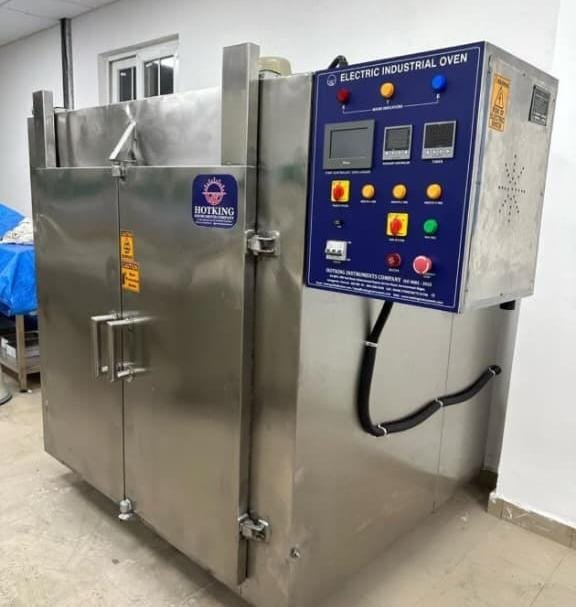
NMP Udhyog has developed an in-house process called Narti PureBay™, using controlled UV-C exposure as part of its microbial-control approach for herbal powders.
The purpose is not to replace laboratory testing with a marketing claim.
The purpose is to add a controlled processing step to the manufacturing system and then verify product quality through appropriate testing.
Why Does the Process Matter?
Because a buyer should know how the manufacturer controls the product, rather than simply being told that the product is “high quality.”
At NMP Udhyog, the objective is to control important manufacturing parameters while avoiding unnecessary reliance on treatments that are not part of the company’s manufacturing approach.
Where a specific microbial claim is made, the appropriate laboratory report should be the evidence.
3. Will the Manufacturer Show You the Actual Factory?
This sounds like a simple question.
It is surprisingly powerful.
Ask the supplier:
“Can I have a video call with your manufacturing team and see the production facility?”
You should be able to see more than a reception area.
Ask to see:
- Raw-material storage
- Processing area
- Grinding or milling equipment
- Drying facilities
- Microbial-control process
- Packaging area
- Finished-goods storage
- Quality-control or testing arrangements
Why a Live Factory Walkthrough Matters
Photographs can be selected.
Videos can be edited.
A live video walkthrough is different.
It allows you to ask questions while looking at the facility.
At NMP Udhyog, prospective business partners can request a video walkthrough of the manufacturing facility so they can understand where and how their products are manufactured.
4. Can the Manufacturer Work With a Small New Brand?
This is one of the biggest challenges for a new cosmetics entrepreneur.
Large manufacturers may be happy to discuss a million-unit opportunity.
But what happens when you want to start with 500 units?
Or 1,000?
Or a small pilot shipment to understand whether your Italian or Spanish customers actually want the product?
Small Quantity Does Not Mean Small Ambition
A new brand needs room to test:
- Product-market fit
- Packaging
- Pricing
- Customer response
- Advertising
- Marketplace performance
- Repeat purchase rate
A manufacturer that understands startup brands should be able to discuss an initial production strategy rather than forcing a new entrepreneur into an unrealistic first order.
NMP Udhyog is structured to work with brands starting at smaller quantities while also having the manufacturing capability to scale as demand grows.
5. What Happens After You Receive the Products?
This is where many private-label discussions stop.
The manufacturer produces your products.
The cartons leave India.
You receive the shipment.
And then?
You suddenly realise that manufacturing was only the first half of the business.
Building the Brand Is Easier Than Building Demand
You can create:
- A logo
- A website
- Packaging
- An Instagram account
- An Amazon listing
But none of these automatically creates sales.
The real challenge is:
How do you get the first 100 customers?
Private Label Should Not End at the Factory Gate
A good manufacturing partner should understand that a new brand may need practical guidance around:
- Product positioning
- Product descriptions
- Marketplace listings
- E-commerce presentation
- Customer education
- Content strategy
- Repeat-purchase strategy
- Brand positioning
NMP Udhyog’s experience as a manufacturer and brand operator gives it a different perspective.
We don’t only understand how to manufacture herbal products.
We also understand the challenges involved in taking herbal products to customers through e-commerce.
Manufacturing is what we produce. Business experience is what we bring to the partnership.
6. Is the Manufacturing Facility Designed Around Hygiene?
This should never be treated as a cosmetic detail.
When manufacturing herbal powders, hygiene, handling, storage and process control matter.
Ask your manufacturer:
- How are raw materials stored?
- How is finished powder protected?
- How are production areas cleaned?
- How is cross-contamination controlled?
- How are workers trained?
- How is equipment maintained?
- How are finished products stored before dispatch?
Look Beyond the Catalogue
A manufacturer can sell you a beautiful finished pouch.
But your real product starts much earlier:
Raw material → processing → quality control → microbial control → packaging → storage → export.
Every stage matters.
The Manufacturing Environment Is Part of Your Brand
When a customer in Milan, Madrid or Barcelona buys a product carrying your brand name, they don’t see the Indian factory.
They see your brand.
That means your manufacturer’s manufacturing standards eventually become part of your brand reputation.
What Should a European Brand Ask an Indian Herbal Manufacturer?
| Question | Why It Matters | What to Request |
|---|---|---|
| Are you a manufacturer or trader? | Confirms who actually controls production. | Factory address and manufacturing evidence. |
| Can you support private label? | Determines whether your brand can be produced under your specifications. | Private-label process and quotation. |
| Do you offer white label? | Useful for faster market testing. | Existing catalogue and available formulations. |
| What certifications do you hold? | Helps verify quality systems and claims. | Current certificates and scope. |
| How do you control microbial quality? | Important for herbal powders. | Process description and laboratory reports. |
| Do you use EtO? | Allows the buyer to understand the treatment process. | Written manufacturing declaration. |
| Do you add preservatives? | Important for formulation and marketing claims. | Formula/ingredient documentation. |
| Can you show the factory live? | Provides confidence in actual manufacturing capability. | Video walkthrough. |
| Can you handle small quantities? | Critical for startups. | MOQ and pilot-order terms. |
| Can you scale production? | Important if the brand grows. | Production capacity information. |
| What support is available after production? | Manufacturing alone doesn’t create demand. | Post-production and business support. |
What Makes NMP Udhyog Different?
NMP Udhyog is not positioned as a marketplace connecting you with an unknown third-party factory.
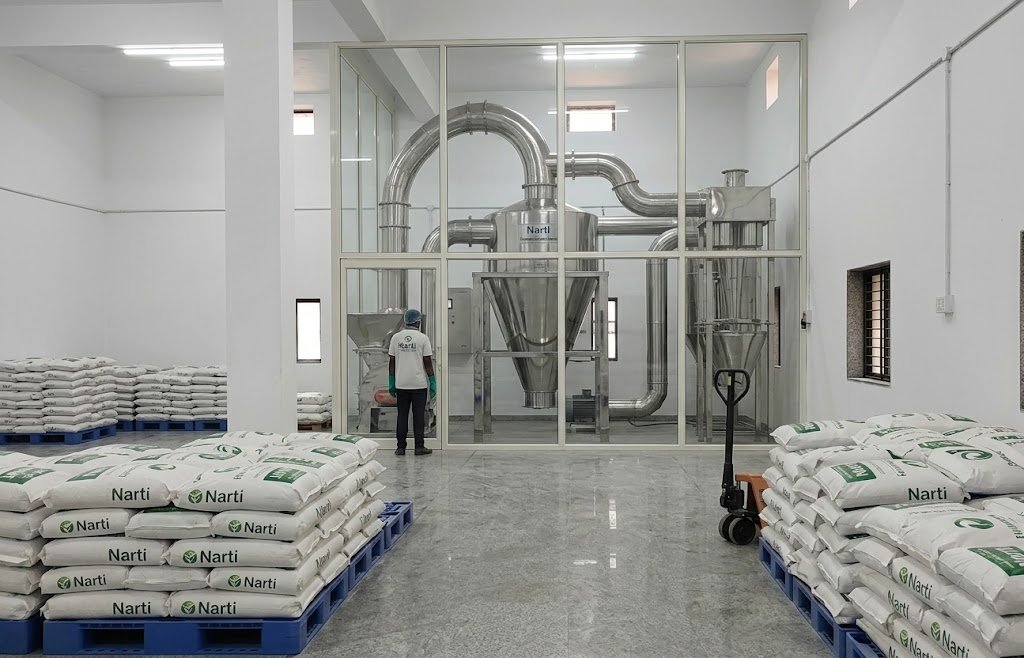
We are a manufacturer.
That distinction matters.
Manufacturing at the Source
NMP Udhyog operates its herbal manufacturing facility in Sojat City, Rajasthan, India, a region internationally associated with Indian henna production and herbal processing.
Built for Herbal Products
Our manufacturing focus is on herbal powders and related herbal products rather than trying to manufacture every category of cosmetic product.
Narti PureBay™
Our in-house UV-C based microbial-control process is part of our approach to managing microbial quality in herbal powders.
Manufacturing Transparency
Potential partners can request a video walkthrough of the manufacturing facility and discuss the production process directly with the manufacturer.
Small Brand Friendly
We understand that your first order may not be a container.
You may need to test your market first.
That is why we are prepared to discuss smaller starting quantities and then scale production as your brand grows.
Business Experience
NMP Udhyog is not only involved in manufacturing.
Through Narti, we understand the practical challenges of selling herbal products online, creating product content, positioning products and building customer demand.
From Sojat, Rajasthan to Milan, Madrid and the European Market
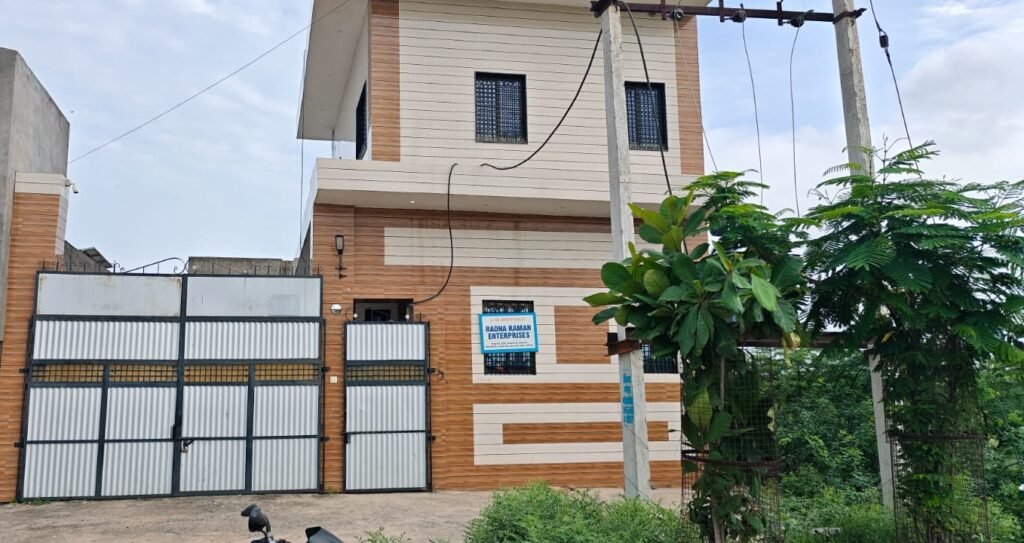
There is a long journey between a herb growing in India and a customer buying a finished product in Europe.
That journey can look like this:
| Stage | What Happens |
|---|---|
| 1. Raw Material | Botanical raw materials are sourced and evaluated. |
| 2. Processing | Material is processed according to the manufacturer’s production procedure. |
| 3. Quality Control | Relevant quality parameters are evaluated. |
| 4. Microbial Control | NMP’s Narti PureBay™ process can form part of the microbial-control system where applicable. |
| 5. Packaging | Product is packed according to the agreed specification. |
| 6. Documentation | Required manufacturing and product documentation is prepared according to the project. |
| 7. Export | Finished products are prepared for international shipment. |
| 8. European Brand | Your company sells the finished product under its own brand. |
Important: EU Cosmetic Compliance Is Separate From Manufacturing
This is something every new European brand owner should understand before placing a private-label order.
Having a good Indian manufacturer does not by itself make a product automatically legal for sale in the EU.
EU cosmetic products are governed by Regulation (EC) No. 1223/2009. Before placing a cosmetic product on the EU market, the responsible person must ensure that the product has undergone the required safety assessment and that the required product information is available. Products also need notification through the EU Cosmetic Products Notification Portal (CPNP) where applicable. :contentReference[oaicite:1]{index=1}
Manufacturing must comply with Good Manufacturing Practice. EN ISO 22716 is the relevant harmonised standard referenced by the European Commission for cosmetics GMP. :contentReference[oaicite:2]{index=2}
What Does This Mean for Your Brand?
If you are launching a cosmetic product in Italy, Spain or another EU market, you should work with the appropriate European regulatory professionals and responsible person to ensure the finished product meets the requirements applicable to your product and market.
Your Indian manufacturer should be able to provide the technical and manufacturing information needed for the regulatory process, but the European market-entry responsibilities should be clearly allocated between the manufacturer, importer, brand owner and EU Responsible Person.
Do Not Choose a Supplier Simply Because They Say “EU Certified”
Ask exactly:
- Which certificate?
- Issued by whom?
- What does it cover?
- Is it current?
- Which manufacturing site does it cover?
- What documentation can you provide for EU regulatory assessment?
That is the difference between checking a certificate and simply trusting a sales statement.
What Documentation Should a European Private-Label Buyer Discuss With the Manufacturer?
| Document / Information | Why It May Matter |
|---|---|
| Product specification | Defines the agreed product characteristics. |
| Ingredient information | Important for formulation review and EU cosmetic documentation. |
| Laboratory reports | Provide evidence for relevant quality and safety parameters. |
| Microbiological testing | Important for evaluating microbial quality. |
| Manufacturing information | Supports the required product documentation. |
| Certificate copies | Allows the buyer to verify the manufacturer’s stated certifications. |
| Packaging specifications | Helps ensure the packaging matches the agreed product requirements. |
| Batch information | Supports traceability and quality control. |
Why a Small First Order Can Be a Smart Strategy
Imagine you are launching a herbal hair-care brand in Italy.
You have invested in:
- Company registration
- Brand identity
- Packaging
- Website
- Regulatory work
- Photography
- Advertising
- Marketplace fees
And then you discover that your customers don’t like the product.
That is an expensive lesson.
A pilot order can allow you to test:
- Customer response
- Packaging acceptance
- Price point
- Product reviews
- Repeat purchase
- Advertising performance
Once the market demonstrates demand, you can increase production.
Start Small. Learn. Improve. Scale.
That is often a more sensible approach for a new herbal brand than committing your entire budget to a large first production run.
Private Label Herbal Cosmetics for Italy
Italy has a strong consumer culture around beauty, personal care and natural ingredients.
If you are developing a herbal brand for Italian consumers, your manufacturer should be able to support you with more than a product catalogue.
You need:
- Consistent manufacturing
- Traceable batches
- Quality documentation
- Appropriate packaging
- Export support
- Product information
- Regulatory cooperation
- Scalable production
NMP Udhyog can work with entrepreneurs who want to develop herbal products for their own brand rather than simply purchasing generic bulk powder.
Private Label Herbal Cosmetics for Spain
Spain is another attractive market for entrepreneurs building natural and herbal beauty brands.
But the same principle applies:
Do not choose a supplier only because the price is low.
Your supplier is part of your brand’s quality chain.
A lower manufacturing price means very little if the product later creates problems with quality, documentation, consistency or customer complaints.
Private Label Herbal Cosmetics for the European Market
If your long-term plan is to sell across Europe, think about scalability from the beginning.
Your first product may be sold in Italy.
Your second market may be Spain.
Then France.
Germany.
The Netherlands.
And eventually other European markets.
Your manufacturer should be capable of growing with your brand rather than forcing you to change suppliers every time your order quantity increases.
White Label vs Private Label: Which NMP Model Is Right for You?
| Your Situation | Recommended Starting Approach |
|---|---|
| I have a brand idea but no product yet. | White label can be a practical starting point. |
| I want to test the market quickly. | White label may reduce development time. |
| I want a unique product concept. | Private label may be more appropriate. |
| I already have an established brand. | Private label/custom development may provide more differentiation. |
| I want to start with a smaller quantity. | Discuss available MOQ and pilot production options with the manufacturer. |
| I want to scale across Europe. | Choose a manufacturer capable of consistent, scalable production. |
The Six-Point NMP Udhyog Manufacturer Checklist
Before you place your first order, ask yourself:
| # | Question | NMP Udhyog Approach |
|---|---|---|
| 1 | Is the manufacturer genuinely certified? | Relevant certification documentation can be discussed and verified. |
| 2 | How is microbial quality controlled? | Narti PureBay™ UV-C microbial-control process forms part of NMP’s manufacturing approach. |
| 3 | Can I see the factory? | Video walkthroughs can be arranged for prospective partners. |
| 4 | Can I start with a smaller quantity? | NMP Udhyog works with brands starting at smaller quantities and can discuss scalable production. |
| 5 | Will you support me after production? | NMP brings manufacturing and practical e-commerce/brand experience to the relationship. |
| 6 | Is the facility designed around hygiene? | Manufacturing processes are built around controlled handling, processing and storage. |
Why Choose NMP Udhyog as Your Indian Herbal Manufacturing Partner?
Your European brand may start with one product.
But your manufacturer should be thinking about the next ten.
NMP Udhyog’s objective is to build long-term manufacturing relationships with entrepreneurs who want to create herbal brands rather than simply buy anonymous bulk powder.
What We Offer
- Herbal product manufacturing
- White-label opportunities
- Private-label manufacturing
- Small-batch starting options
- Scalable manufacturing
- Manufacturing documentation
- Quality-control support
- Narti PureBay™ UV-C microbial-control process
- Factory video walkthroughs
- Export-oriented production support
- Practical e-commerce and brand experience
From Your Brand Idea to a Finished European Product
Imagine starting with a simple conversation.
You tell us:
“I want to build a herbal hair-care brand in Italy.”
We discuss your product idea.
Then the formulation.
Then packaging.
Then quantity.
Then quality requirements.
Then testing and documentation.
Then production.
Then export.
And eventually, your first customer in Europe opens a product carrying your brand name.
That is what private-label manufacturing should ultimately be about.
Not simply selling you a carton of powder.
Helping you build a product that can become a brand.
Frequently Asked Questions About Private Label Herbal Cosmetics Manufacturing in India
What is private label herbal cosmetics manufacturing?
Private-label manufacturing allows a manufacturer to produce a cosmetic product for another company’s brand. Depending on the agreement, the product may use an existing formulation, a customised formulation or a product developed specifically for the buyer.
What is white label manufacturing?
White-label manufacturing generally involves an existing product or formulation that can be sold under another company’s brand, subject to the manufacturer’s terms and applicable regulatory requirements.
What is the difference between private label and white label?
White label generally involves an existing product that can be branded by multiple businesses, while private label can involve greater customisation or a product developed specifically for one brand.
Can I start a herbal cosmetics brand with a small order?
Some manufacturers support smaller initial quantities. NMP Udhyog works with brands that want to begin at smaller quantities and discuss scaling as the business grows. Exact MOQ depends on the product, packaging and manufacturing requirements.
Can an Indian manufacturer export herbal cosmetics to Italy?
Indian manufacturers can manufacture products intended for export, but selling a cosmetic product in the EU requires the finished product and responsible economic operators to meet the applicable EU requirements. The EU Cosmetics Regulation requires safety assessment and other compliance steps before products are placed on the EU market. :contentReference[oaicite:3]{index=3}
Does my Indian manufacturer need to handle CPNP?
CPNP obligations depend on the roles of the parties and who is the EU Responsible Person. The EU Commission states that responsible persons and, in certain circumstances, distributors submit the required product information through CPNP. :contentReference[oaicite:4]{index=4}
Does an Indian manufacturer need ISO 22716?
EU cosmetics must be manufactured in accordance with Good Manufacturing Practice. EN ISO 22716 is the harmonised standard referenced by the European Commission for cosmetics GMP and provides a presumption of conformity when applicable. :contentReference[oaicite:5]{index=5}
Does an organic certificate automatically make a product EU compliant?
No. Organic certification and EU cosmetic regulatory compliance are different matters. A product may have an organic certification while still requiring the appropriate EU safety assessment, documentation, notification and other compliance steps.
Can NMP Udhyog manufacture products under my brand?
Yes. NMP Udhyog can discuss white-label and private-label manufacturing opportunities depending on the product and project requirements.
Can NMP Udhyog manufacture customised herbal products?
Customisation depends on the product, formulation, ingredients, technical requirements, MOQ and regulatory requirements. These details should be discussed during product development.
Can I see the NMP Udhyog manufacturing facility before placing an order?
Prospective partners can request a video walkthrough of the manufacturing facility to understand the production environment and manufacturing process.
What is Narti PureBay?
Narti PureBay™ is NMP Udhyog’s in-house UV-C based microbial-control process used as part of its approach to managing microbial quality in herbal products.
Does NMP Udhyog use EtO?
NMP Udhyog’s manufacturing approach is designed around its own processing and microbial-control system rather than relying on EtO treatment. Specific product and batch requirements should be confirmed with NMP Udhyog before production.
Does NMP Udhyog add preservatives to herbal powders?
Dry herbal powder products can be manufactured without added preservatives depending on the product specification. The exact formulation and ingredient declaration should always be confirmed for the individual private-label product.
Can NMP Udhyog help after manufacturing?
NMP Udhyog can provide practical guidance based on its experience manufacturing and selling herbal products through e-commerce. Regulatory responsibilities, however, remain separate and should be handled with the appropriate EU regulatory professionals.
Can NMP Udhyog help me build a herbal brand in Italy?
Yes. NMP Udhyog can discuss manufacturing, packaging, product development and export requirements for entrepreneurs developing a herbal brand for Italy. EU regulatory compliance should be planned alongside the manufacturing project.
Can NMP Udhyog supply herbal products for Spain?
Yes. Spain can be discussed as an export destination for suitable herbal products, subject to the product specification, commercial agreement and applicable EU requirements.
Your Manufacturer Should Be More Than a Supplier
When you are building a herbal cosmetics brand in Europe, your manufacturer becomes part of your business.
They influence:
- Product consistency
- Quality
- Manufacturing documentation
- Production timelines
- Scalability
- Customer confidence
- Your ability to launch new products
So don’t choose your Indian manufacturer only because they offer the lowest quotation.
Choose the manufacturer who is willing to answer the difficult questions.
Can I see your certificate?
Can I see your factory?
How do you control microbial quality?
Can you start with my quantity?
What documentation can you provide?
What happens after I receive my products?
If the supplier is uncomfortable answering those questions, that tells you something.
If the manufacturer welcomes those questions, opens the factory door and explains the process, you may have found a potential long-term partner.
Ready to Build Your Herbal Brand in Europe?
Whether your first market is Italy, Spain, or another European country, the first step is not placing the biggest possible order.
The first step is finding the right manufacturing partner.
At NMP Udhyog, we work with entrepreneurs who want to build herbal brands through:
- White-label manufacturing
- Private-label manufacturing
- Small initial production
- Scalable manufacturing
- Manufacturing and quality documentation
- Factory transparency
- Export-oriented production
Or contact our manufacturing team to discuss your product idea, target market, quantity and private-label requirements.
Build Your Brand in Europe. Manufacture at the Source in India.
NMP Udhyog — Herbal Manufacturing for Brands That Want to Build for the Long Term.