- Henna Powder Manufacturer & Exporter in India
- +91 9910415530
- online@nmpudhyog.com

From Plant to Pigment: How Effective is Henna Hair Dye?
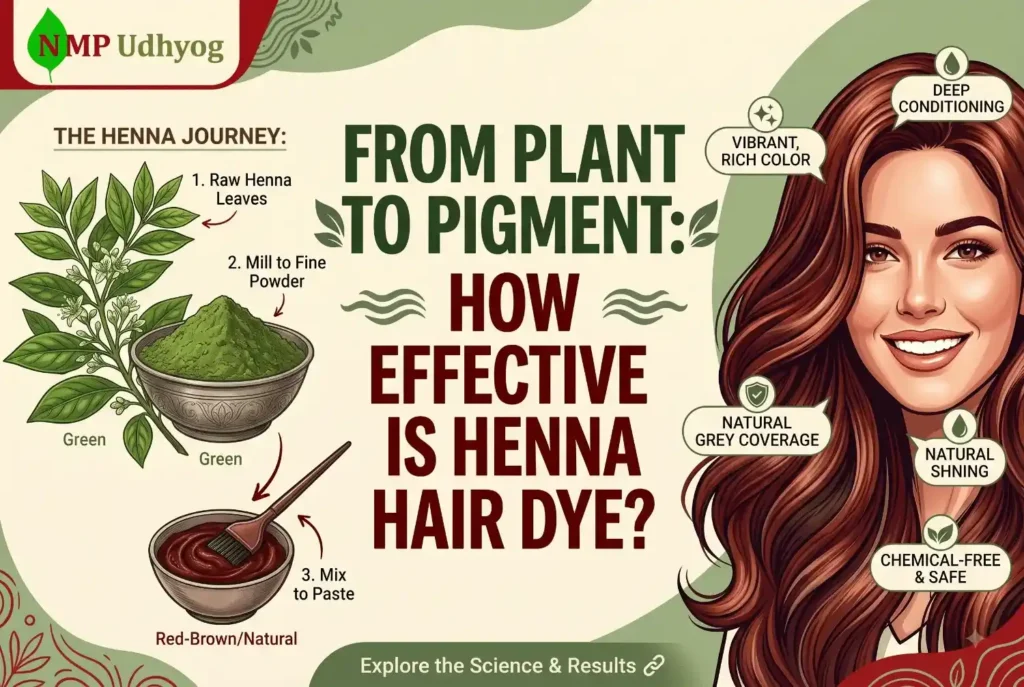
For centuries, people across the globe have turned to nature to enhance their beauty. Among the myriad of natural remedies, henna stands out as one of the oldest and most popular natural hair dyes. But in an era dominated by high-tech salon treatments and boxed chemical dyes, a common question arises: How effective is henna hair dye, really?
Can a simple powder made from crushed leaves truly cover grays, deliver vibrant color, and replace your standard chemical dye? The short answer is yes—but understanding exactly how it works is key to setting the right expectations and achieving beautiful results.
Here is everything you need to know about the effectiveness of henna hair dye, from its color payoff to its long-term impact on your hair’s health.
The Science of the Stain: What is Henna?
Henna is derived from the Lawsonia inermis plant, a shrub native to hot, dry climates in regions like North Africa, the Middle East, and India. When the leaves of this plant are harvested, dried, and ground into a fine powder, they can be mixed with a slightly acidic liquid (like lemon juice, black tea, or apple cider vinegar) to release a naturally occurring dye molecule called lawsone.
Unlike chemical dyes that use ammonia to forcefully pry open the hair cuticle and deposit artificial pigment inside, the lawsone molecule works differently. It safely penetrates the hair shaft and actively binds to the keratin (the protein that makes up your hair). This binding process is what makes henna so incredibly effective and long-lasting.
How Effective is Henna for Coloring Hair?
When judging the effectiveness of any hair dye, we look at three main factors: color payoff, longevity, and gray coverage. Here is how henna scores in each category.
1. Color Payoff and Variations
Pure henna only produces one color: a rich, reddish-orange to deep auburn. The final result depends entirely on your natural hair color, as henna acts like a translucent stain over your existing shade.
- On light blonde or gray hair: Henna will yield a bright, fiery orange or vibrant copper red.
- On brown hair: It creates a deep, rich auburn or chestnut hue with brilliant red undertones that catch the light.
- On black hair: Henna will not lighten your hair (since it contains no bleach). Instead, it leaves a beautiful, subtle red sheen that is mostly visible in direct sunlight.
Want a different color? By mixing henna with other natural plant powders, such as Indigo (which yields a blue/black dye) or Cassia (a neutral conditioning herb), you can create customized shades ranging from golden blonde and medium brown to jet black.
2. Longevity and Fading
If you are looking for a permanent solution, henna is highly effective. Because the lawsone molecule binds directly to the hair’s keratin, pure henna is practically impossible to wash out. It does not fade as quickly as artificial red dyes, which are notorious for washing down the drain after just a few shampoos.
However, this permanence is a double-edged sword. Because it does not fade easily, you cannot simply strip it out if you change your mind. Bleaching over henna can push the pigment deeper into the hair shaft or result in unpredictable colors, so commitment is required.
3. Gray Coverage
Can henna cover stubborn grays? Absolutely. In fact, it is one of the most effective natural solutions for gray hair.
However, because pure henna turns gray hair bright orange, achieving a natural brown or black shade on gray hair usually requires a “two-step process.”
- Step 1: Apply pure henna to deposit the red/orange base.
- Step 2: Apply an indigo paste immediately afterward to turn that red base into a rich brown or black.
While time-consuming, this method provides 100% gray coverage without a single drop of harsh chemicals.
The Added Bonus: Hair Health and Integrity
One of the biggest reasons people switch to natural dyes is the condition it leaves the hair in. Chemical dyes deplete the hair of moisture and protein over time, leading to split ends and breakage. Henna does the exact opposite.
- Thickens the Hair Shaft: Because henna binds to the outside of the hair cuticle, it physically adds a microscopic layer of thickness to each strand, making fine hair feel significantly fuller.
- Smooths and Shines: It naturally conditions the hair, flattening the cuticle to reflect light beautifully, resulting in an incredible, glass-like shine.
- Scalp Health: Henna has natural antifungal and antimicrobial properties, which can effectively help combat dandruff and balance scalp pH.
The Importance of Sourcing Pure Henna
Not all henna is created equal. The effectiveness and safety of your dye job depend entirely on the quality of the powder you use.
Many commercial “henna” dyes found in drugstores contain dangerous metallic salts or a harsh chemical called PPD (Paraphenylenediamine) to speed up processing time or alter the color. These additives can cause severe allergic reactions or completely fry your hair if you ever try to use traditional dye over them.
To guarantee you are using 100% natural, body-art quality (BAQ) powder, you should always source your supplies from a reputable Henna Powder Exporter. High-quality exporters ensure that their leaves are finely sifted, correctly harvested, and free of harmful chemical additives.
Furthermore, if you run a salon or are looking to start your own line of organic hair care, collaborating with trusted Hair Dye Manufacturers is the best way to secure potent, safe, and highly effective natural dye formulations.
Tips for Maximum Effectiveness
If you decide to take the plunge into natural coloring, follow these tips to ensure maximum color payoff:
- Allow for Dye Release: Don’t mix henna and apply it immediately. Mix it with an acidic liquid (like warm water and a splash of lemon juice) and let it sit for 8 to 12 hours so the dye molecules can fully release.
- Apply to Clean Hair: Apply the paste to freshly washed, dry (or slightly damp) hair that is free of oils and heavy conditioners, which can block the dye from binding.
- Keep it Warm and Moist: Once applied, wrap your head tightly in cling film. Henna needs warmth and moisture to process effectively.
- Be Patient: Natural dyes take time. Leave the paste on your hair for at least 3 to 4 hours.
- Avoid Immediate Shampooing: When rinsing it out, use only water and a silicone-free conditioner. Avoid shampooing for 48 to 72 hours, as the color will naturally oxidize and deepen over the next few days.
The Final Verdict
So, how effective is henna hair dye? If you are looking for a permanent, vibrant color that simultaneously improves the strength, thickness, and shine of your hair, henna is incredibly effective. It completely eliminates the need for ammonia, peroxides, and parabens.
While the application process requires a bit more time and patience than a standard box dye, the lush, healthy, and deeply pigmented results are more than worth the effort. By choosing pure, high-quality powders, you can seamlessly transition from plant to pigment, achieving salon-worthy color straight from nature.