- Henna Powder Manufacturer & Exporter in India
- +91 9910415530
- online@nmpudhyog.com

How to Remove Mehndi from Hands and Nails: Safe and Easy Methods
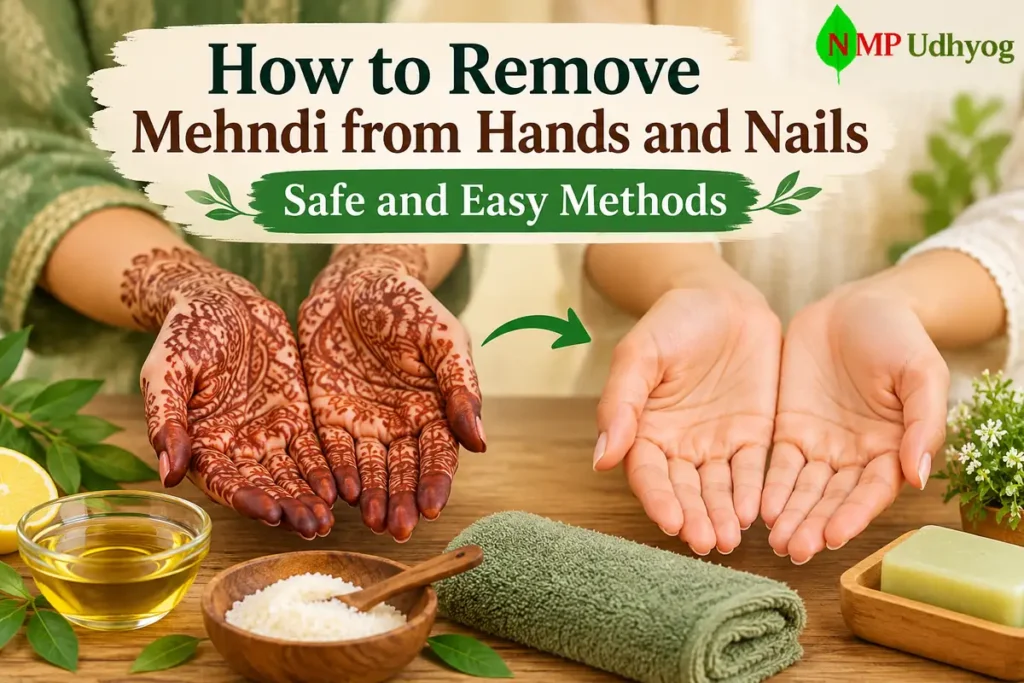
Mehndi stains can remain visible for several days, even after the henna paste has been washed away. If you are wondering how to remove mehndi from your hands quickly, gentle washing, mild exfoliation and natural skin renewal can help the colour fade.
However, removing a developed henna stain instantly is generally not possible because the dye binds to proteins in the outer layers of your skin.
How to Remove Mehndi from Hands at Home
Several simple methods can help fade mehndi stains without exposing your skin to harsh chemicals. Results depend on how dark the stain is and how long it has been present.
1. Wash with Soap and Lukewarm Water
Washing your hands is the simplest way to remove leftover henna paste and gradually reduce surface staining.
- Wet your hands with lukewarm water.
- Apply mild soap and massage gently.
- Rinse thoroughly and pat your skin dry.
- Apply moisturiser to prevent dryness.
Regular handwashing may help the stain fade naturally, but repeated washing in a short period will not remove it completely.
2. Apply Coconut Oil or Olive Oil
Natural oils can help soften the skin and loosen any remaining henna residue.
Apply a small amount of coconut oil or olive oil to the stained area and massage gently for a few minutes. Afterwards, wash your hands with mild soap.
Although oils are gentle options for many people, there is limited evidence that they significantly accelerate the removal of developed henna stains.
3. Try Gentle Exfoliation
Mehndi stains gradually disappear as stained skin cells shed. Gentle exfoliation may help remove some dead skin cells from the surface.
Use a soft, damp washcloth to massage the stained area lightly. Avoid excessive pressure or frequent scrubbing, which can cause redness and irritation.
Do not exfoliate broken, sensitive or already irritated skin.
4. Moisturise and Allow Natural Fading
Moisturising helps maintain the skin barrier while the stain fades naturally.
Apply a fragrance-free moisturiser after washing your hands. This will not directly remove the dye, but it can reduce dryness caused by frequent cleaning.
Can You Remove Mehndi from Hands Instantly or in 5 Minutes?
No, there is no proven, skin-safe method that can completely remove a developed natural mehndi stain in five minutes.
Fresh henna paste can be washed off before the stain fully develops, but once the dye has bonded with the outer skin layers, removing it becomes more difficult.
Soap, oils and gentle exfoliation may help with surface residue or gradual fading, but they cannot guarantee immediate results.
Avoid home remedies promising instant removal through bleaching agents, strong acids or aggressive scrubbing. These methods can damage your skin without reliably removing the stain.
How to Remove Mehndi from Hands and Nails Quickly
Mehndi stains on nails can be more difficult to remove because henna also binds to keratin in the nail plate.
To clean stained nails safely:
- Wash your nails with mild soap and lukewarm water.
- Use a soft nail brush to remove any remaining paste or dirt.
- Apply cuticle oil or moisturiser to prevent dryness.
- Allow the stained nail to grow naturally.
Avoid scraping, excessive buffing or using household bleach on your nails.
Unlike skin stains, nail discolouration may remain until the stained portion grows out, which can take several months.
How Long Does Mehndi Take to Fade Naturally?
Natural mehndi stains commonly fade within one to three weeks, although the exact duration varies.
Several factors influence how long the colour remains:
- Stain intensity: Darker, well-developed stains may remain visible longer.
- Body location: Palms and fingertips may retain colour differently from other areas.
- Skin renewal: Natural shedding gradually removes stained skin cells.
- Henna formulation: Ingredients and application techniques can affect the resulting stain.
Nail stains generally last longer than skin stains because nails grow rather than shed like the outer skin layers.
What Should You Avoid When Removing Mehndi?
Trying to remove mehndi too aggressively may cause more harm than the stain itself.
Avoid household bleach, strong chemical cleaners, excessive scrubbing and repeated applications of lemon juice or baking soda, particularly on sensitive skin.
Product ingredients also matter. When sourcing henna from a henna powder exporter or assessing products offered by a henna dye manufacturer, check their intended use and ingredient information. Hair colouring products are not automatically suitable for skin application.
Black henna containing para-phenylenediamine (PPD) can cause serious allergic reactions. Seek medical advice if a stain is accompanied by blistering, swelling or significant irritation.
Frequently Asked Questions
1. How can I remove mehndi from my hands quickly?
Wash your hands with mild soap and lukewarm water. Gentle exfoliation may help the stain fade gradually, but complete removal usually requires natural skin renewal.
2. Can mehndi be removed completely in 5 minutes?
No. Once natural henna has stained the skin, complete removal within five minutes is generally unrealistic. Fresh, unabsorbed henna paste can be removed more easily.
3. How do I remove dark mehndi stains from my hands?
Clean your hands gently, moisturise regularly and allow the skin to renew naturally. Avoid harsh bleaching products or aggressive scrubbing, even when stains appear particularly dark.
4. How can I remove mehndi from my hands and nails?
Use mild soap and gentle cleaning for both areas. Skin stains fade as cells shed, while stained nails generally need time to grow out.
5. Does coconut oil help remove mehndi stains?
Coconut oil can soften skin and help loosen residual paste, but it is not proven to remove developed henna stains quickly or completely.
Conclusion
Removing mehndi from hands and nails requires patience rather than harsh treatments. Mild washing, careful exfoliation and regular moisturising are safer approaches while natural fading takes place.
Although several home remedies claim to remove mehndi instantly, allowing the stain to fade naturally is generally the most reliable way to protect your skin.