- Henna Powder Manufacturer & Exporter in India
- +91 9910415530
- online@nmpudhyog.com

Imported Henna in Europe: Quality, Safety & Sourcing Risks for Cosmetic Brands
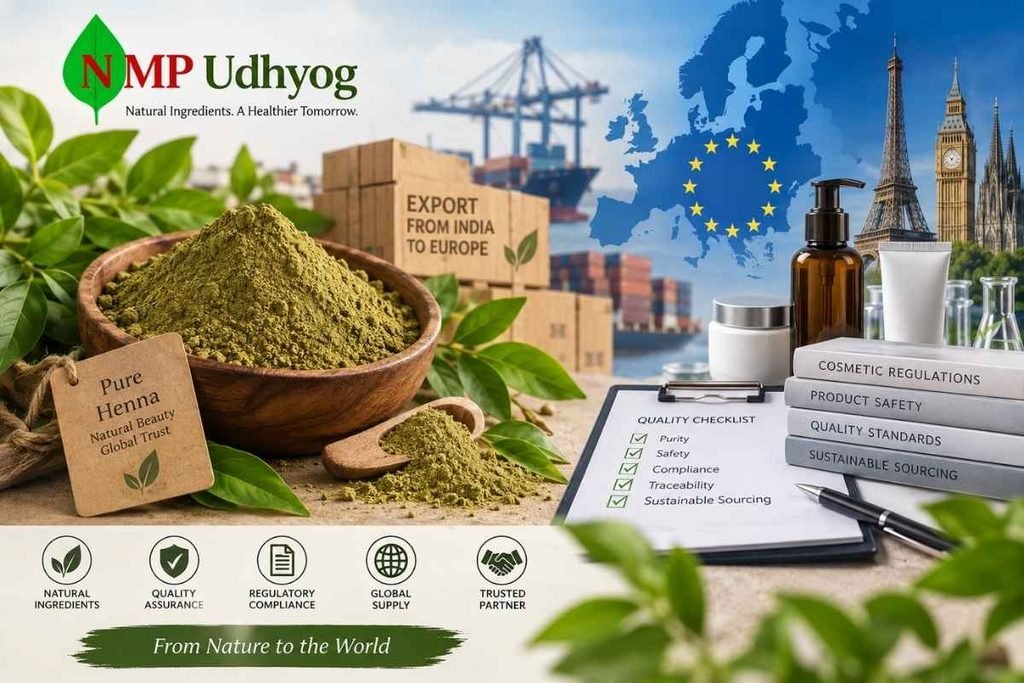
Henna has become an increasingly interesting ingredient for cosmetic brands looking to offer plant-based hair colour and beauty products. Its natural origin, traditional use, and distinctive colouring properties make it attractive for brands across Europe. However, importing henna is not simply a matter of finding a supplier, checking the price and arranging shipment.
For European cosmetic brands, the quality and documentation behind the raw material can have a direct impact on the final product. Issues such as inconsistent quality, contamination, incorrect labelling, poor documentation and variations in composition can create challenges during formulation, testing, and regulatory compliance.
This is why choosing the right supplier is an important part of building a reliable henna-based cosmetic product.
Why Henna Quality Matters for European Cosmetic Brands
Henna is obtained from Lawsonia inermis, a plant traditionally used as a natural colouring material. Its colouring properties are associated with lawsone, a naturally occurring compound in the plant.
However, natural does not automatically mean that every batch will have exactly the same characteristics. Plant-based raw materials can vary depending on cultivation conditions, harvesting, processing, storage, and other factors.
For a cosmetic brand, these variations can affect:
- Colour performance
- Product consistency
- Raw material specifications
- Formulation performance
- Shelf stability
- Consumer expectations
- Quality control procedures
The European Commission’s Scientific Committee on Consumer Safety has specifically assessed Lawsonia inermis as a hair dye. Its assessment was based on particular henna batches and a defined use scenario, which shows why the exact material and intended use matter when evaluating safety.
The Risk of Inconsistent Imported Henna
One of the main concerns for brands purchasing henna internationally is batch-to-batch consistency.
Two products may both be sold as “henna powder”, but their characteristics can differ considerably depending on the plant material and manufacturing process. A cosmetic manufacturer therefore needs more than a product name when evaluating a raw material.
Important information can include:
- Botanical identity
- Ingredient specifications
- Physical characteristics
- Purity information
- Microbiological quality
- Storage requirements
- Batch information
- Testing documentation
- Manufacturing information
For brands selling products in Europe, having reliable technical information from the supplier can make product development and quality control much easier.
European Cosmetic Regulations and Supplier Documentation
European cosmetic products are subject to Regulation (EC) No 1223/2009. The regulation requires a cosmetic product to undergo a safety assessment before being placed on the market, and a Cosmetic Product Safety Report must be prepared.
The Product Information File, or PIF, must also contain important information about the cosmetic product, including its safety report, manufacturing method, and compliance with good manufacturing practice. The responsible person must retain the PIF for ten years after the last batch is placed on the market.
This means European brands need to consider the quality of information available from their raw material suppliers when developing henna-based products.
A dependable supplier should be able to provide relevant technical and batch information that can support the brand’s own quality and regulatory processes.
Safety Should Not Be Assumed Simply Because Henna Is Natural
The word “natural” is often used as a major selling point in cosmetics, but it should not replace proper safety evaluation.
The European Commission’s SCCS assessment of Lawsonia inermis concluded that the information provided was sufficient to assess safe use of the specific henna material as a hair dye under the evaluated conditions. It also stated that other types of henna extracts with different compositions were not covered by that assessment.
This distinction is important.
A brand should not assume that every product labelled as henna is automatically equivalent to the material that has been assessed. The raw material’s identity, composition, intended use and formulation all need to be considered.
This is particularly important when sourcing products that contain additional ingredients or are marketed as modified or “black henna” products.
Contamination and Adulteration Can Create Problems
Another consideration is the possibility of contamination or adulteration in poorly controlled supply chains.
For cosmetic brands, unwanted materials can create problems ranging from inconsistent colour to microbiological concerns and difficulties during product safety assessment.
A professional sourcing process should therefore focus on more than the appearance or price of the powder. Brands should consider the supplier’s manufacturing controls, quality testing, traceability and ability to maintain consistent specifications.
This becomes even more important when a brand plans to manufacture products at scale. A small variation in one shipment may become a much larger commercial problem when thousands of units are produced.
Why Supplier Traceability Matters
Traceability allows a brand to connect the finished product back to its raw material and production batch.
For henna, useful traceability information can include:
- Batch or lot number
- Manufacturing date
- Raw material identification
- Production records
- Testing records
- Storage information
- Shipment documentation
Good traceability helps brands investigate quality complaints and manage individual batches more effectively.
It also creates a stronger relationship between the cosmetic brand and its raw material supplier.
Choosing a Henna Supplier for the European Market
European cosmetic brands should evaluate potential suppliers carefully rather than choosing only on the basis of price.
A reliable Henna Powder Exporter should be able to discuss product specifications, manufacturing processes, quality controls and documentation relevant to the buyer’s requirements.
Brands can ask potential suppliers questions such as:
- What botanical material is used?
- How is the henna processed?
- What quality parameters are tested?
- Is batch-level documentation available?
- How is the product stored before export?
- Can the supplier maintain consistent specifications between batches?
- What packaging options are available?
- Can the supplier support private-label or bulk requirements?
These questions can help cosmetic companies identify whether a supplier is suitable for long-term sourcing rather than simply fulfilling a single order.
Manufacturing Experience Makes a Difference
A supplier with experience in cosmetic raw materials can understand that European brands often require more than a bulk shipment of powder.
The supplier may need to work with the brand on specifications, packaging, batch requirements and documentation. Clear communication at the beginning of the relationship can prevent problems later during formulation and production.
For brands developing hair colouring products, working with an experienced Hair dye manufacturer can also help create a more structured supply chain, particularly when the brand requires consistent product specifications and manufacturing support.
Quality Control Should Start Before the Shipment
Quality control should not begin after the raw material reaches Europe.
It should start at the manufacturing and sourcing stage.
A good quality system can include controlled raw materials, defined processing procedures, batch identification, appropriate testing and suitable storage conditions. The finished raw material should then be packed in a way that helps protect its quality during transportation and storage.
This approach is especially important for plant-based ingredients because their characteristics can be affected by processing and storage conditions.
What European Cosmetic Brands Should Look For
When evaluating imported henna, cosmetic brands should consider five key areas:
Raw material identity: Confirm that the material is correctly identified and matches the intended cosmetic application.
Consistency: Look for suppliers capable of maintaining defined specifications from batch to batch.
Testing: Request relevant quality and safety documentation rather than relying only on supplier claims.
Traceability: Make sure batches can be identified and tracked throughout the supply chain.
Regulatory support: Ensure the supplier can provide technical information that can support the brand’s own regulatory and safety processes.
The EU’s Cosmetic Products Notification Portal is also part of the regulatory framework. Under Article 13, responsible persons and, in certain circumstances, distributors submit required cosmetic product information through the CPNP before products are placed on the European market.
Final Thoughts
Imported henna is not inherently a problem for European cosmetic brands. The greater concern is uncontrolled sourcing and insufficient quality information.
Henna can be a valuable raw material for hair colour and other cosmetic applications, but brands need to understand exactly what they are purchasing. Consistent specifications, traceability, testing, manufacturing controls and appropriate documentation can make the sourcing process more reliable.
For European cosmetic companies, the goal should not simply be to find the lowest-cost henna supplier. It should be to establish a dependable supply chain where raw material quality and documentation can support the brand’s formulation, safety assessment and long-term product consistency.
NMP Udhyog can be positioned around these requirements by providing henna products for businesses that need dependable sourcing and professional manufacturing support.