- Henna Powder Manufacturer & Exporter in India
- +91 9910415530
- online@nmpudhyog.com

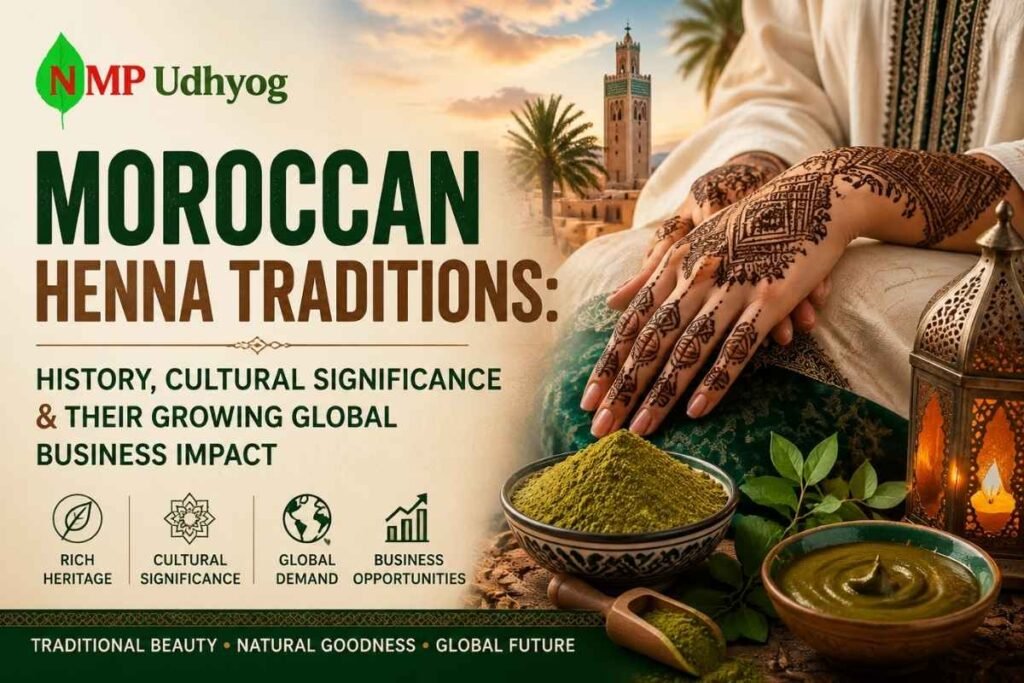
Moroccan Henna Traditions: History, Cultural Significance & Their Growing Global Business Impact
Introduction
For centuries, Moroccan henna traditions have been an important part of the country’s culture, celebrations, and daily life. More than just a natural dye, henna represents beauty, protection, joy, and cultural identity. From wedding ceremonies and religious festivals to modern beauty treatments, Moroccan henna continues to connect generations while also creating economic opportunities for thousands of people.
Today, the popularity of natural beauty products has helped Moroccan henna reach international markets. Consumers are moving away from chemical-based products and choosing herbal alternatives for hair coloring and body art. This shift has increased the global demand for high-quality henna, creating opportunities for farmers, artisans, exporters, and cosmetic manufacturers.
Morocco is not the only country known for premium-quality henna. India, especially the Sojat region of Rajasthan, has earned worldwide recognition for producing some of the finest henna used in hair care and cosmetic products. If you’re interested in learning more about premium Indian henna, explore our guide on Organic Natural Henna Powder and discover why it is trusted by businesses and consumers worldwide.
In this article, we’ll explore the rich history of Moroccan henna traditions, their cultural importance, how they compare with Indian henna traditions, and why they continue to shape a growing global business.
What Are Moroccan Henna Traditions?
Henna has been part of Moroccan life for hundreds of years. It is made by drying and grinding the leaves of the henna plant into a fine powder. When mixed with water and natural ingredients, it creates a paste that is applied to the skin or hair.
Unlike temporary fashion trends, Moroccan henna traditions are deeply connected with family values, spirituality, and celebrations. Henna is commonly applied during weddings, engagements, Eid celebrations, childbirth ceremonies, and other important life events.
Many Moroccan families believe henna symbolizes:
- Happiness
- Good fortune
- Protection from negative energy
- Fertility
- Prosperity
- New beginnings
The beautiful geometric designs used in Morocco often reflect Amazigh (Berber) cultural heritage. These patterns differ from the floral and paisley styles commonly seen in South Asian countries.
Beyond its cultural value, Moroccan henna has become an important product in the natural beauty industry, serving customers looking for safe alternatives to synthetic dyes.
The History of Henna in Morocco
The history of henna in Morocco stretches back many centuries. Historians believe henna spread across North Africa through ancient trade routes connecting Africa, the Middle East, and Asia. Over time, it became an essential part of Moroccan traditions.
The Amazigh communities played a major role in preserving henna customs. Their symbolic patterns were not created simply for decoration. Each design often represented protection, health, strength, family, or blessings.
As Islamic traditions became part of Moroccan culture, henna also gained importance during religious festivals and weddings. Applying henna before special occasions became a way to celebrate happiness while seeking blessings for the future.
Although lifestyles have changed over the years, these traditions remain alive today. Modern Moroccan brides still celebrate Henna Night before their wedding, and many families continue passing traditional designs from one generation to the next.
The increasing appreciation for cultural heritage has also encouraged international tourists to experience authentic Moroccan henna art during their travels.
Different Types of Moroccan Henna Designs
Moroccan henna designs are easy to recognize because of their bold and structured appearance. Unlike the detailed floral artwork popular in South Asia, Moroccan patterns focus on symmetry and meaningful symbols.
Traditional Amazigh Designs
Inspired by Berber heritage, these designs include diamonds, triangles, zigzags, and straight lines representing protection, strength, and harmony.
Wedding Henna
Brides receive more detailed designs covering the hands and feet. These patterns symbolize love, happiness, prosperity, and a successful married life.
Festival Henna
During Eid and family celebrations, women often choose elegant yet simpler designs that reflect joy and togetherness.
Modern Moroccan Fusion
Today’s artists combine traditional Moroccan symbols with contemporary styles, creating designs that appeal to younger generations while preserving cultural roots.
Why Henna Plays an Important Role in Moroccan Weddings
One of the most beautiful Moroccan traditions is the Henna Night held before the wedding ceremony. This event brings together family members and friends to celebrate the bride before she begins married life.
During the ceremony, experienced henna artists carefully decorate the bride’s hands and feet using meaningful designs. The process is often accompanied by music, traditional clothing, storytelling, and family blessings.
Many families believe the henna ceremony offers:
- Protection from negative energy
- Blessings for the couple
- Fertility and prosperity
- Good luck
- Family unity
While traditions vary across different regions of Morocco, the emotional importance of Henna Night remains the same.
Today, many wedding planners also include henna experiences for international visitors, making it an important part of Morocco’s cultural tourism industry.
Moroccan Henna vs Indian Henna: What’s the Difference?
Although both countries are famous for henna, their traditions, artistic styles, and commercial industries have developed differently.
| Feature | Moroccan Henna | Indian Henna |
|---|---|---|
| Design Style | Geometric | Floral and Paisley |
| Cultural Influence | Amazigh and Arab | Hindu, Mughal, and regional traditions |
| Main Use | Weddings, festivals, body art | Weddings, festivals, body art, hair coloring |
| Popular Export | Body art and cosmetics | Hair care, cosmetics, herbal products |
| Global Market | Growing | Highly established |
India has become one of the world’s leading producers of premium henna powder. Regions like Sojat in Rajasthan are internationally known for producing high-quality henna with excellent coloring properties. If you’d like to learn why this region has earned a global reputation, read our guide on Henna Powder Manufacturers in Sojat, Rajasthan.
Both Moroccan and Indian henna traditions continue to inspire millions of people worldwide while supporting thriving natural beauty industries.
The Growing Global Business Behind Moroccan Henna
Moroccan henna is no longer limited to traditional ceremonies. It has become part of a much larger international market driven by changing consumer preferences.
People across the world are becoming more conscious about the ingredients used in beauty products. Many consumers now prefer herbal alternatives that are free from harsh chemicals.
This growing demand has created opportunities for:
- Henna farmers
- Women’s cooperatives
- Cosmetic brands
- Beauty salons
- Export companies
- Online retailers
- Wellness businesses
Natural henna is now used in:
- Hair coloring
- Temporary body art
- Herbal hair masks
- Scalp care
- Spa treatments
- Organic beauty products
Businesses that focus on authenticity, quality, and sustainable sourcing are seeing strong demand in international markets.
How Moroccan Henna Supports Local Communities
Henna production provides income for many rural families in Morocco.
Women play an especially important role throughout the supply chain. They help harvest the leaves, process the powder, prepare traditional products, and create beautiful body art for weddings and celebrations.
Tourism also contributes to local economies. Visitors often purchase handmade henna products, experience traditional body art, and support local artisans.
As interest in cultural tourism continues to grow, Moroccan henna has become more than a beauty product. It has become an important part of preserving traditional craftsmanship while creating sustainable employment opportunities.
Why Natural Henna Is Becoming More Popular Worldwide
The beauty industry has changed significantly over the past decade.
Consumers are reading ingredient labels more carefully than ever before. Many people are actively searching for products made with natural plant-based ingredients instead of synthetic chemicals.
Henna fits perfectly into this trend because it offers several advantages.
Chemical-Free Beauty
Pure henna contains natural coloring pigments without relying on ammonia or harsh dyes.
Multi-Purpose Benefits
Henna is used for hair coloring, conditioning, scalp care, and temporary body art.
Eco-Friendly Choice
As a plant-based product, properly processed henna supports environmentally conscious beauty routines.
Traditional Knowledge Meets Modern Beauty
Consumers increasingly appreciate products backed by centuries of traditional use.
If you’re exploring natural alternatives for hair coloring, our article about Hair Dye Manufacturers & Suppliers in India explains how leading manufacturers are developing high-quality herbal hair color solutions to meet growing global demand.
Challenges Facing the Moroccan Henna Industry
Despite its popularity, the Moroccan henna industry faces several challenges.
Fake Henna Products
Some products sold as “henna” contain harmful chemicals that can cause allergic reactions.
Quality Control
Maintaining consistent quality is essential for international exports.
Climate Change
Agricultural production depends heavily on weather conditions, making farming increasingly unpredictable.
Market Competition
Countries such as India continue to dominate the global henna export market through large-scale production and advanced processing facilities.
Consumer Awareness
Many buyers still struggle to distinguish between pure natural henna and chemically mixed alternatives.
Educating consumers remains one of the industry’s biggest opportunities.
The Future of Moroccan Henna
The future looks promising for Moroccan henna traditions.
Growing awareness about sustainable beauty, herbal cosmetics, and organic personal care products is expanding the market every year.
Businesses are investing in:
- Organic certifications
- Sustainable farming
- Better packaging
- International exports
- E-commerce
- Private-label manufacturing
At the same time, cultural tourism continues introducing Moroccan henna traditions to visitors from around the world.
By combining traditional craftsmanship with modern business practices, Morocco has an opportunity to strengthen its position in the global natural beauty market while preserving its cultural heritage.
Frequently Asked Questions
Is Moroccan henna natural?
Yes. Pure Moroccan henna is made from the dried leaves of the henna plant without synthetic coloring agents.
Why is Moroccan henna famous?
It is known for its rich cultural traditions, geometric designs, and use in weddings, festivals, and celebrations.
Is Moroccan henna safe for hair?
Pure natural henna is generally considered a safer alternative to many chemical-based hair dyes. However, users should always perform a patch test before application.
What makes Moroccan henna different from Indian henna?
Moroccan henna is best known for geometric body art designs, while Indian henna is widely recognized for intricate floral patterns and large-scale production of premium hair-care henna.
How long does Moroccan henna last?
Body art usually lasts between one and three weeks, depending on skin type, aftercare, and the quality of the henna paste.
Is Moroccan henna used only for body art?
No. It is also used for natural hair coloring, scalp care, herbal beauty treatments, and traditional ceremonies.
Why are henna ceremonies important in Morocco?
They symbolize blessings, happiness, protection, prosperity, and family unity during important life events.
Is the demand for natural henna increasing?
Yes. The growing preference for herbal and chemical-free beauty products has increased global demand for high-quality natural henna.
Can Moroccan henna be exported?
Yes. Moroccan henna is exported to many countries for use in cosmetics, wellness products, and traditional body art.
Which country produces some of the world’s finest henna?
Both Morocco and India are well known for premium-quality henna. India, particularly the Sojat region of Rajasthan, has earned a strong international reputation for producing high-quality henna powder for cosmetic and hair-care applications.
Conclusion
Moroccan henna traditions are much more than decorative art. They represent centuries of history, cultural identity, and community values while contributing to a growing global natural beauty industry. From traditional wedding ceremonies to international cosmetic markets, henna continues to connect heritage with innovation.
As consumers increasingly choose plant-based and sustainable beauty products, the importance of authentic henna will continue to grow. Whether it is the symbolic geometric designs of Morocco or the world-renowned premium henna produced in India, this remarkable plant remains one of nature’s most valued gifts for beauty, wellness, and cultural expression.