- Henna Powder Manufacturer & Exporter in India
- +91 9910415530
- online@nmpudhyog.com

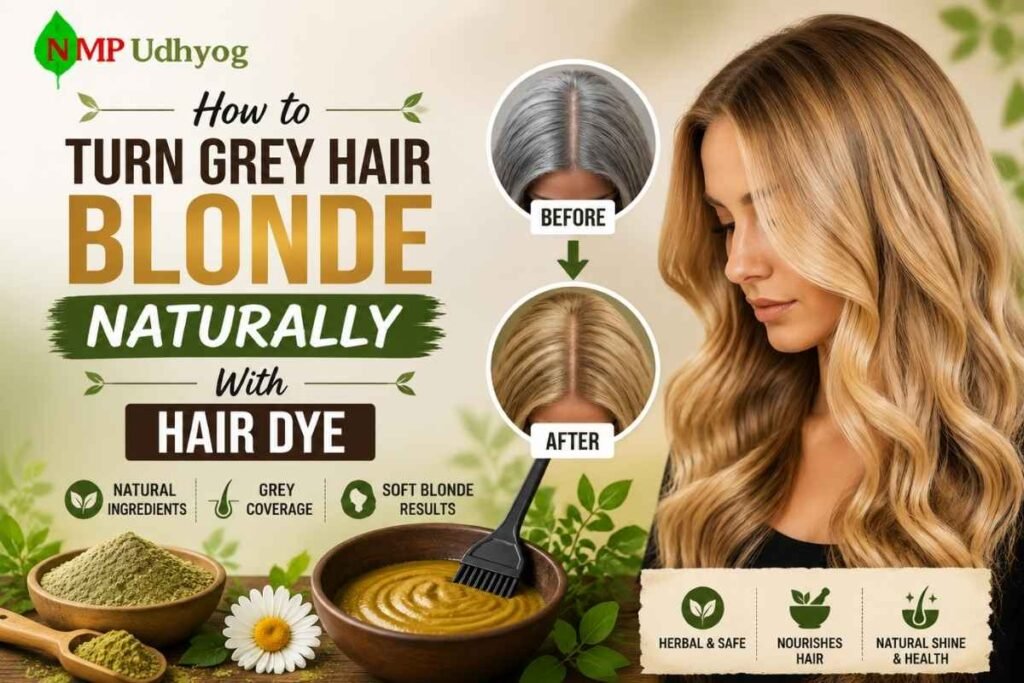
How to Turn Grey Hair Blonde Naturally With Hair Dye
Introduction
Grey hair no longer means you have to choose dark black or brown shades to hide it. Many people now prefer soft blonde tones because they create a lighter, more natural, and modern look. Blonde shades can also blend grey hair more smoothly, making regrowth less noticeable compared to darker colors.
Instead of using harsh bleaching treatments repeatedly, many users are shifting toward herbal and product-based hair dye solutions that are gentler on the scalp and hair texture. Natural ingredients like henna, cassia, and plant-based color blends can help create warm golden or honey blonde tones over time without excessive chemical damage.
Many people now prefer Natural Henna for Hair instead of chemical-based color treatments because it helps condition the hair while adding natural-looking color depth.
Best Natural Hair Dye Ingredients for Blonde Grey Hair
If you want to achieve blonde tones on grey hair without relying completely on strong chemical dyes, herbal hair coloring ingredients can help create a softer and more natural finish. These ingredients usually work best for golden blonde, honey blonde, or warm beige tones rather than icy platinum shades.
Henna
Henna is one of the most popular natural hair coloring ingredients. While pure henna gives reddish-orange tones, it also helps prepare grey hair for layered blonde and golden shades when mixed with other herbal powders. It improves shine, strengthens the hair shaft, and gives the hair a healthier appearance.
Cassia
Cassia is often called “neutral henna” because it provides light golden tones instead of deep red color. On grey hair, cassia can create soft blonde or honey-like highlights naturally. It is commonly used by people who want subtle brightness without darkening their hair too much.
Chamomile
Chamomile is widely used in herbal hair care for enhancing golden tones. Chamomile-based hair masks and herbal dye blends can help grey hair appear warmer and slightly sun-kissed over time. It works especially well for maintaining blonde undertones naturally.
Indigo Balancing
Indigo is normally used for darker shades, but in controlled amounts, it can help balance overly warm or orange tones from henna-based mixtures. This creates a more natural-looking blonde-brown finish instead of overly copper hair.
Herbal Hair Packs
Many herbal hair packs combine ingredients like amla, bhringraj, cassia, aloe vera, and hibiscus to nourish the hair while gradually improving color texture. These blends are gentler on the scalp compared to repeated bleaching sessions.
Natural dyes usually create soft blonde or golden undertones instead of platinum blonde shades. The final result depends on your original hair color, the amount of grey hair, and how consistently you use the products.
Choosing a trusted Henna Powder Exporter is important for getting pure and chemical-free herbal powders that deliver safer and more reliable hair coloring results.
Step-by-Step Guide to Turn Gray Hair Blonde Naturally
If you want to turn gray hair blonde without causing excessive dryness or damage, the process should be gradual and product-focused rather than aggressive bleaching. Using herbal hair dye blends consistently can help create soft blonde and golden tones over time.
Wash Your Hair Properly First
Start with freshly cleaned hair before applying any herbal dye mixture. Use a mild cleanser to remove oil, dirt, and product buildup so the color can attach evenly to the hair strands. Clean hair absorbs natural pigments much better.
Avoid Silicone-Heavy Shampoos
Silicone-rich shampoos and conditioners can create a coating on the hair, making it difficult for natural dyes to work effectively. Try switching to lightweight or herbal hair care products a few days before coloring your hair.
Prepare the Herbal Dye Mix
To turn gray hair blonde naturally, many people use combinations of cassia, chamomile, herbal blonde blends, and small amounts of henna for warmth. The mixture should have a smooth consistency so it spreads evenly from root to tip.
Apply Evenly on Grey Hair
Section your hair carefully and apply the dye mixture evenly, especially on areas with higher grey coverage. Uneven application can lead to patchy golden or yellow tones.
Leave the Mixture for the Recommended Time
Natural hair dye products usually need more processing time compared to chemical colors. Leave the mixture on your hair according to the product instructions to help the blonde undertones develop properly.
Rinse Without Harsh Shampoo
After the processing time is complete, rinse your hair thoroughly with plain water or a mild sulfate-free cleanser. Avoid harsh shampoos immediately after coloring because they can strip away the fresh herbal pigments.
Repeat Weekly for Gradual Blonde Tones
Herbal coloring works gradually, not instantly. Repeating the process weekly or biweekly can help build softer blonde tones while keeping the hair healthier and more manageable.
For people searching for how to turn grey hair blonde naturally, consistency matters more than overnight results. Natural hair dye methods usually create warmer honey, beige, or golden blonde shades instead of bright platinum blonde hair.
Which Blonde Shade Works Best on Grey Hair?
Choosing the right blonde shade for grey hair is important because not every blonde tone gives the same natural-looking result. Some shades create warmth and softness, while others give a cooler and more modern appearance. The best option depends on your skin tone, undertones, and how much maintenance you are comfortable with.
Golden Blonde
Golden blonde is one of the easiest and most natural-looking options for grey hair. It adds warmth and brightness without looking too harsh. This shade works especially well for people with warm or medium skin tones because the golden undertones help the hair appear healthier and more vibrant.
Honey Blonde
Honey blonde creates a soft blend of golden and beige tones that can make grey hair look smoother and more dimensional. It is a popular choice for people who want a youthful look without going extremely light. Honey blonde usually requires less maintenance because regrowth blends more naturally with grey roots.
Ash Blonde
Ash blonde has cooler undertones and is ideal for reducing yellow or overly warm tones in grey hair. People with fair or cool-toned skin often prefer ash blonde because it creates a cleaner and more modern appearance. However, ash shades may need toning products more frequently to maintain the cool finish.
Beige Blonde
Beige blonde sits between warm and cool shades, making it one of the safest options for many skin tones. It gives a soft and balanced appearance without looking too yellow or too icy. Beige blonde is often recommended for first-time blonde users transitioning from grey hair.
Understanding Warm vs Cool Undertones
Warm blonde shades like honey and golden blonde create a brighter and sun-kissed look, while cool shades like ash blonde give a muted and sophisticated finish. Choosing the wrong undertone can make the skin appear dull or washed out, so matching your natural complexion is important.
Skin Tone Matching
- Warm skin tones usually suit golden and honey blonde shades
- Cool skin tones often look better with ash blonde
- Neutral skin tones can carry beige blonde very well
A shade that complements your skin tone will always look more natural than simply choosing the lightest blonde available.
Maintenance Level Matters
Some blonde shades are easier to maintain than others. Warm blonde tones generally fade more naturally and require fewer touch-ups, while cool ash blonde shades may need regular toning treatments to prevent yellowing. If you want lower maintenance, honey blonde or beige blonde is usually the better option for grey hair.
Mistakes That Make Grey Hair Look Yellow Instead of Blonde
Many people trying to achieve blonde tones on grey hair end up with unwanted yellow or brassy shades instead of a soft natural blonde finish. In most cases, the problem comes from incorrect products, poor hair care habits, or overprocessing the hair. Avoiding these common mistakes can help maintain cleaner and more balanced blonde tones.
Overusing Lemon on Hair
Lemon is often promoted as a natural hair lightener, but excessive use can dry out the hair and create uneven yellow patches instead of a smooth blonde tone. The acidic nature of lemon can also make grey hair appear dull and rough over time, especially when combined with sun exposure.
Using Cheap Chemical Dyes
Low-quality hair dyes may contain harsh ingredients that create artificial yellow or orange tones on grey hair. These products often fade unevenly and can damage the hair cuticle, making the blonde color look brassy very quickly. Investing in better-quality herbal or professional hair color products usually gives more natural-looking results.
Hard Water Buildup
Hard water contains minerals like calcium and iron that can leave deposits on the hair. These minerals gradually make blonde or grey hair appear yellowish and lifeless. Using filtered water or clarifying treatments occasionally can help prevent mineral buildup and maintain a cleaner blonde appearance.
Excess Heat Styling
Frequent use of straighteners, curling tools, and high-heat dryers can weaken blonde-treated grey hair. Heat damage often changes the color tone and makes the hair appear dry, faded, or yellow. Lower heat settings and heat protection products can help preserve softer blonde shades for longer.
Wrong Toner Usage
Toners are designed to balance unwanted warm tones, but choosing the wrong toner can create dull, greyish, green, or overly yellow results. Cool-toned blondes usually need purple-based toners carefully selected according to the hair’s undertone and condition.
Maintaining blonde tones on grey hair requires patience, quality products, and proper aftercare. Small mistakes repeated regularly can quickly turn soft blonde shades into uneven yellow tones.
Natural vs Chemical Blonde Hair Dye for Grey Hair
People trying to color grey hair blonde often struggle between choosing natural herbal dyes or chemical-based blonde hair colors. Both options work differently, and the right choice depends on how fast you want results, your hair condition, and how much maintenance you can handle.
| Natural Hair Dye | Chemical Hair Dye |
|---|---|
| Gradual color development | Faster visible results |
| Less damage to hair texture | Can weaken dry or fragile hair |
| Uses herbal ingredients | Often contains ammonia or peroxide |
| Gentler on sensitive scalps | Higher chance of irritation |
| Creates softer blonde tones | Can achieve lighter platinum shades |
| Requires repeated applications | Usually lasts longer initially |
| Improves hair texture over time | May cause dryness after repeated use |
Natural hair dyes are usually preferred by people who want healthier-looking hair and softer blonde shades without aggressive bleaching. Chemical dyes may provide quicker blonde transformation, but frequent use can increase dryness, breakage, and scalp sensitivity over time.
How Long Does Natural Blonde Color Last on Grey Hair?
Natural blonde tones on grey hair are not permanent and usually fade gradually depending on hair care habits and product quality. Some people notice their color lasting only a few weeks, while others maintain the shade for much longer with proper maintenance.
Hair Porosity Matters
Hair porosity affects how well the color holds onto the strands. Highly porous hair absorbs color quickly but may also lose it faster. Low-porosity hair may take longer to show results, but the color often fades more evenly.
Wash Frequency Affects Color Retention
Frequent shampooing can strip natural pigments from the hair more quickly. Using mild sulfate-free shampoos and washing the hair less often can help preserve blonde undertones for a longer time.
Sun Exposure Can Fade Blonde Tones
Excessive sunlight and UV exposure can make blonde shades look dry, faded, or yellow over time. Covering the hair outdoors or using UV-protective hair products can help maintain a cleaner blonde finish.
Product Quality Makes a Big Difference
The quality of herbal powders and hair dye products directly affects how long the color lasts. Pure and properly processed ingredients usually provide better color retention and healthier-looking hair compared to low-quality products with fillers or harsh additives.
Can Henna Be Used Before Blonde Hair Coloring?
Henna can be used before blonde hair coloring, but it must be done carefully. Since henna naturally leaves warm orange or reddish undertones on the hair, it can affect the final blonde shade if the process is not planned properly. People trying to achieve soft golden or honey blonde tones often use herbal preparations strategically instead of directly applying strong bleach.
Importance of Strand Testing
Before applying any blonde hair dye after henna, always perform a strand test on a small section of hair. This helps you understand how your hair will react and whether the final tone will appear golden, coppery, or uneven. Strand testing also reduces the risk of unwanted color surprises.
Avoid Henna With Metallic Salts
One of the biggest mistakes is using low-quality henna products that contain metallic salts or hidden chemicals. These ingredients can react badly with hair dyes and may cause patchy color, dryness, or even hair damage. Always choose pure herbal henna from trusted sources.
Use Proper Herbal Preparation Methods
If you want softer blonde tones, herbal blends using cassia, chamomile, and mild henna combinations usually work better than heavy dark henna applications. Gradual coloring methods help create warmer and more natural-looking blonde undertones on grey hair instead of harsh artificial shades.
Pure Natural Red Henna Art products are often preferred by users looking for herbal coloring alternatives because they are commonly chosen for cleaner and more natural herbal applications.
Conclusion
Blonde shades can help soften the appearance of grey hair while creating a more natural and modern look compared to darker hair colors. Instead of depending on harsh bleaching treatments repeatedly, many people now prefer product-based herbal coloring methods that are gentler on the hair and scalp over the long term.
Natural blonde results usually take time to build, so consistency is more important than expecting instant transformation in one session. Using quality herbal hair dye products regularly can help achieve smoother golden, honey, or beige blonde tones while maintaining healthier-looking hair.
Choosing high-quality herbal ingredients and trusted hair coloring products also plays a major role in getting better color results and avoiding unnecessary hair damage. Many herbal beauty lovers also explore Henna For Body Art products alongside natural hair coloring solutions for a more traditional and plant-based beauty routine.
FAQs About Turning Grey Hair Blonde Naturally
Can grey hair become blonde without bleach?
Yes, grey hair can develop soft blonde or golden tones without heavy bleaching because grey hair already lacks natural pigment. Herbal dyes and gentle hair coloring products can help create a lighter appearance gradually.
Is blonde hair easier on grey hair?
Blonde shades often blend more naturally with grey regrowth compared to dark black or brown dyes. This can make maintenance easier and reduce the appearance of harsh root lines.
Which natural dye works best for blonde grey hair?
Cassia, chamomile, herbal blonde blends, and mild henna combinations are commonly used for achieving soft blonde or honey tones on grey hair naturally.
How to turn grey hair blonde safely at home?
Use high-quality herbal or low-damage hair dye products, avoid excessive bleaching, follow strand testing, and maintain the hair with gentle shampoos and conditioners for safer results at home.
Does henna turn grey hair blonde?
Pure henna alone does not usually create blonde hair. It normally gives warm orange or copper tones. However, when combined carefully with other herbal ingredients, it can contribute to softer golden blonde undertones.