- Henna Powder Manufacturer & Exporter in India
- +91 9910415530
- online@nmpudhyog.com

Is Henna Edible? Can You Eat Henna Leaves or Is Henna Poisonous?
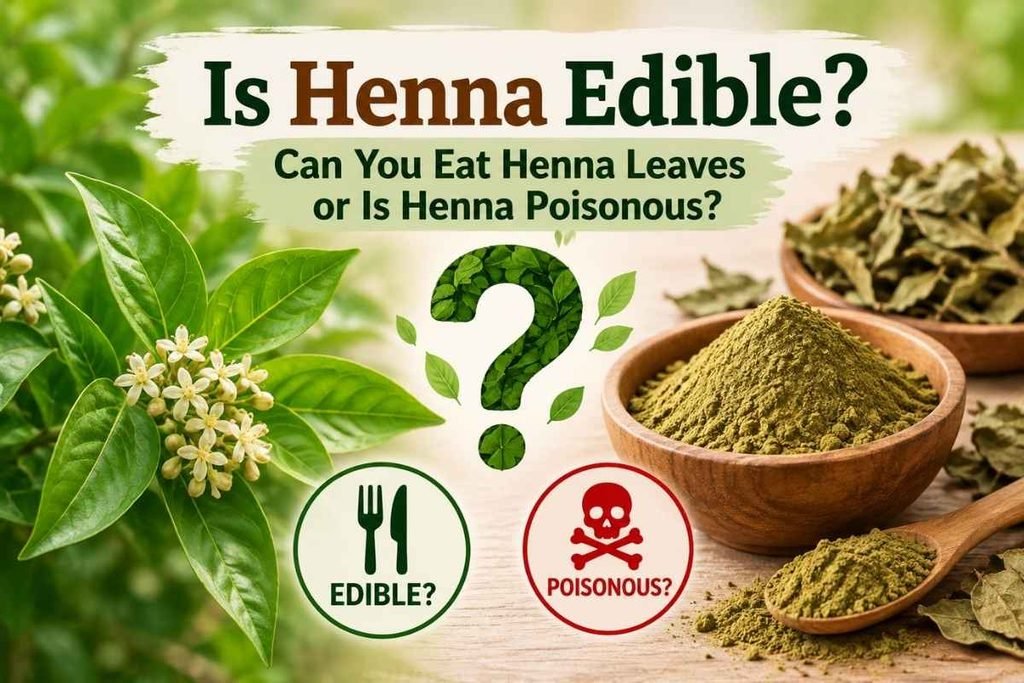
Henna is a popular natural plant that has been used for centuries for hair care, body art, and natural dyeing. It comes from the henna plant, scientifically known as Lawsonia inermis. While most people know henna as mehendi for hands or as a natural hair color, some people have another question: is henna edible?
You may come across fresh henna leaves, dry henna leaves, or henna powder and wonder whether they can be eaten. It is important to understand that a plant being natural does not automatically mean that every form of the plant is suitable for consumption. Henna products are generally made for external applications such as hair and body art, so they should not be treated as food products.
Let’s understand what henna leaves are, how they are used, and whether eating henna is safe.
Is Henna Edible?
Henna is not generally considered a food ingredient. Natural henna comes from the leaves of Lawsonia inermis, which are traditionally processed and used externally for hair coloring, body art, and natural dyeing.
If you are asking is henna edible, the safest approach is not to consume henna products that are made for cosmetic or body-art use. These products are not manufactured or labeled as food, and they may not meet the safety standards required for products intended for consumption.
Henna powder used for hair or mehendi should therefore be used only according to the product’s intended purpose and instructions.
Being a natural plant does not automatically make a product suitable for eating. Many plants have specific traditional or cosmetic uses without being appropriate food ingredients.
Can You Eat Henna Leaves?
The question can you eat henna often comes from people who have seen a henna plant or fresh leaves.
Henna plant leaves are primarily known for their use in producing natural dye. Fresh leaves can be processed, dried, and ground to make henna powder. This powder is commonly used externally on hair and skin.
There is an important difference between a plant being traditionally used in different cultures and a commercially prepared product being suitable for consumption. Henna products intended for hair or body art should not be considered edible.
If someone accidentally puts a small amount of henna in their mouth, they should avoid consuming more and check the product label to understand what ingredients are present. If a significant amount has been swallowed or symptoms develop, professional medical advice should be sought.
What Are Mehendi Leaves?
Mehendi leaves are the leaves of the henna plant, Lawsonia inermis. The terms “mehendi” and “henna” are commonly used for the plant and the natural dye made from its leaves.
Fresh mehendi leaves are green and contain natural compounds that produce the characteristic henna stain. After harvesting, the leaves can be cleaned, dried, and processed into a fine powder.
Traditionally, this powder is mixed with suitable liquids to create a paste for hair coloring or body art.
The leaves are therefore mainly valued for their natural dyeing properties rather than as a food.
What Are Henna Plant Leaves Used For?
Henna plant leaves have several traditional and commercial uses. Their most common use is the production of natural henna powder.
Some common applications include:
- Natural hair coloring
- Covering grey hair with natural color
- Traditional mehendi and body art
- Natural dyeing
- Traditional cosmetic applications
The leaves contain lawsone, a natural coloring compound responsible for the orange, red, and reddish-brown stains associated with henna.
After processing, the leaves can be turned into a fine powder that is easier to store, transport, and use.
Are Dry Henna Leaves Edible?
Many people search for dry henna leaves because dried plant leaves may look similar to herbs used for cooking or traditional preparations. However, dried henna leaves should not automatically be considered edible.
Drying removes moisture from the leaves, but it does not turn a cosmetic product into a food product.
If dried henna leaves are sold for hair coloring, body art, or dyeing, they should be used for those intended purposes. Consumers should always check the product packaging and labeling before using any plant-based product.
This is especially important because commercial products can differ in their ingredients, processing methods, and intended applications.
What Are Dried Henna Leaves?
Dried henna leaves are produced by removing moisture from fresh leaves of the henna plant. The dried material can then be processed into powder.
A simplified process looks like this:
Fresh henna leaves → Cleaning → Drying → Grinding → Henna powder
The quality of the final powder depends on factors such as the quality of the leaves, harvesting, drying conditions, storage, and processing.
Fine-quality henna powder is commonly used for natural hair coloring and body-art applications.
For this reason, dried henna leaves are an important raw material for the natural henna industry.
Is Henna Poisonous?
The question is henna poisonous needs some context because not every product sold as henna has the same ingredients.
Natural henna made from Lawsonia inermis is traditionally used externally for hair and body art. However, products marketed as “black henna” can contain additional chemicals that may cause serious skin reactions in some people.
This is why it is important to know what type of henna you are purchasing.
When choosing henna, look for clear ingredient information and products from reliable manufacturers or suppliers. Do not assume that a product is safe simply because its packaging uses the word “natural.”
Henna products intended for external use should also not be intentionally consumed.
If someone has swallowed a substantial amount of a henna product, especially one containing unknown ingredients, it is appropriate to seek advice from a healthcare professional or local poison information service.
Can You Eat Henna Powder?
Henna powder used for hair or body art should not be treated as an edible powder.
Even though natural henna powder comes from a plant, it is manufactured and sold for specific external uses. Cosmetic-grade or body-art henna is not the same thing as a food ingredient.
The best practice is simple: use henna according to its intended purpose and follow the manufacturer’s instructions.
If you are unsure whether a particular product is suitable for consumption, check its packaging and contact the manufacturer rather than assuming that it is edible.
Natural Henna vs. Black Henna
Understanding the difference between natural henna and products marketed as black henna is important.
Natural henna comes from Lawsonia inermis. Its natural stain generally develops into shades such as orange, reddish-orange, or brown.
Black henna is different. Products sold under this name may contain additional coloring ingredients to create a darker or black stain. Some formulations may contain substances that can cause adverse skin reactions.
Before purchasing henna for body art, always check the ingredients and product information.
For body-art applications, using a product specifically made for that purpose is important. You can explore Henna For Body Art from NMP Udhyog to learn more about products intended for traditional henna applications.
How Is Henna Used for Hair and Body Art?
Henna has two particularly popular applications: hair care and body art.
For hair, henna powder is mixed into a paste and applied to the hair. It can provide a natural reddish, copper, or brown tone depending on the original hair color and the way it is used.
For body art, henna paste is traditionally applied to the skin to create decorative patterns on the hands, feet, and other areas.
The same basic plant can therefore be used for different purposes, but the product should always be selected according to its intended application.
Is Natural Henna Safe to Use on Hair?
Natural henna has a long history of external use on hair. However, individual reactions can vary, and it is sensible to check the ingredients of any commercial product before use.
A patch test can also help identify possible skin sensitivity before applying a new product more extensively.
Choose products from reputable suppliers that provide clear information about ingredients and intended use.
What Happens If Someone Accidentally Eats Henna?
Accidental exposure can happen, especially when henna powder is stored around children or when someone mistakes it for another powdered product.
If a small amount has accidentally been swallowed, avoid consuming more and check the product packaging for its ingredients and intended use.
If a larger amount was consumed, the product contains unknown additives, or the person develops symptoms, seek professional medical advice promptly. Do not rely on online information to determine whether a particular exposure is harmless.
For children, it is especially important to keep cosmetic powders and other non-food products out of reach.
How NMP Udhyog Uses Henna
NMP Udhyog focuses on natural henna products for applications such as hair care and body art. Henna leaves are carefully processed into products that can be used according to their intended purpose.
The quality of the raw material and processing is important because these factors can affect the color, texture, and overall performance of henna powder.
Whether you are looking for henna for hair or traditional body-art applications, always select a product that clearly states its intended use and provides appropriate product information.
Frequently Asked Questions
Is henna edible?
Henna products intended for hair or body art should not be treated as food. They are manufactured for external use rather than consumption.
Can you eat henna leaves?
Henna leaves are primarily used for producing natural dye and henna products. They should not be intentionally consumed without appropriate evidence that a specific product is formulated and approved for consumption.
Are dried henna leaves edible?
Dried henna leaves should not automatically be considered edible. Drying the leaves does not make them a food product.
Is henna poisonous?
Natural henna is traditionally used externally, but products can vary. Some products marketed as black henna may contain additional chemicals that can cause skin reactions. Check ingredients carefully.
Are mehendi leaves and henna leaves the same?
Yes. Mehendi leaves generally refer to the leaves of the henna plant, Lawsonia inermis.
Can you eat henna powder?
Henna powder intended for hair or body art should not be consumed. Always follow the product’s intended use and labeling.
What are henna plant leaves used for?
Henna plant leaves are mainly used to produce natural henna for hair coloring, body art, and natural dyeing.
Final Thoughts
So, is henna edible? Henna is a natural plant, but that does not mean henna products made for hair or body art should be eaten. Fresh henna leaves, dry henna leaves, and henna powder are primarily used for their natural dyeing properties and external applications.
If you have henna at home, always check the product label and use it only for its intended purpose. Choosing products from a reliable supplier and understanding the difference between natural henna and products containing additional chemicals can also help you make safer choices.
For hair care and body art, henna remains a popular natural ingredient with a long history of traditional use. The key is to select the right product for the right application and avoid assuming that a cosmetic product is suitable for consumption simply because it comes from a plant.